
The South Florida coast is one of the best places anywhere to practice photography — if you plan around the light and respect the conditions. These tips apply whether you’re shooting a phone or a full-frame camera.
1. Plan around first and last light
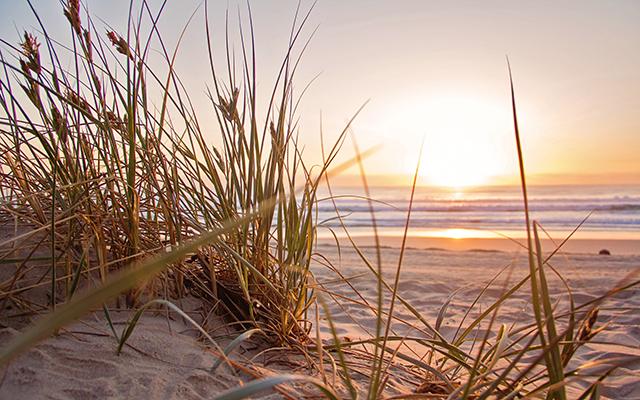
On the Atlantic side of South Florida the sun rises over the water, so sunrise is the prime time for clean, colorful beach shots — and the beaches are nearly empty. Arrive before first light or well before sunset so you’re set up when the color happens. The sky often peaks ten to twenty minutes after the sun is gone, so don’t pack up early.
2. Expose for the sky, then lift the shadows
Bright skies fool cameras into underexposing the whole frame. Meter for the brightest part you want to keep, protect those highlights, and lift the shadows in editing. That keeps both a colorful sky and detailed sand looking natural instead of blown out or muddy.
3. Shoot in RAW
Beach scenes have a huge range from bright sky to dark wet sand. RAW files hold far more highlight and shadow detail than JPEGs, so you can recover a sky or open up shadows later without the color falling apart. If your phone offers RAW or ProRAW, turn it on.
4. Use a polarizer
A circular polarizing filter cuts glare off the water and wet sand, deepens a hazy South Florida sky, and makes the blues and greens of the ocean richer. Rotate it while you watch the effect — the strongest result is when you’re shooting roughly 90 degrees from the sun.
5. Keep your horizon level
A tilted horizon is the fastest way to make a beach photo look amateur, and the ocean makes any tilt obvious. Turn on your camera or phone’s level grid, line the horizon up with a gridline, and avoid placing it dead-center — put it on the upper or lower third depending on whether the sky or the sand is the star.
6. Use leading lines and foreground
The Pompano Beach Pier, a line of footprints, a tide line, or ripples in wet sand all pull the eye into the frame. Get low and include something in the foreground to add depth, so the photo feels three-dimensional instead of a flat strip of sand and sky.
7. Add a person for scale and story
A lone figure, a surfer, or a single set of footprints gives a beach scene scale and emotion. It turns a pretty backdrop into a photograph with a subject. We practice exactly this on outdoor lessons at Pompano and nearby beaches.
8. Control the motion of the water
Decide what the water should do. A fast shutter (1/1000 and up) freezes crashing surf and spray; a slow shutter on a tripod, often with a neutral-density filter, smooths the waves into soft mist. Both are deliberate choices — drifting in auto usually gives you neither.
9. Protect your gear from salt, sand, and spray
- Keep the lens capped until you’re shooting; salt spray travels farther than you think.
- Change lenses away from the wind, or not at all on the beach.
- Set your bag down on a towel, never directly on the sand.
- Wipe everything down with a slightly damp cloth when you get home.
10. Watch the weather and tides
South Florida light changes fast — afternoon storm clouds can add drama or send you running. Check the sunrise and sunset times, the tide chart, and the radar before you go. Low tide exposes wet sand that mirrors the sky for gorgeous reflections, and the calm window just after a passing shower often has the most dramatic light of the day.
Related training
Want personal help with this? Book a private lesson — online or outdoors in South Florida.
Schedule